
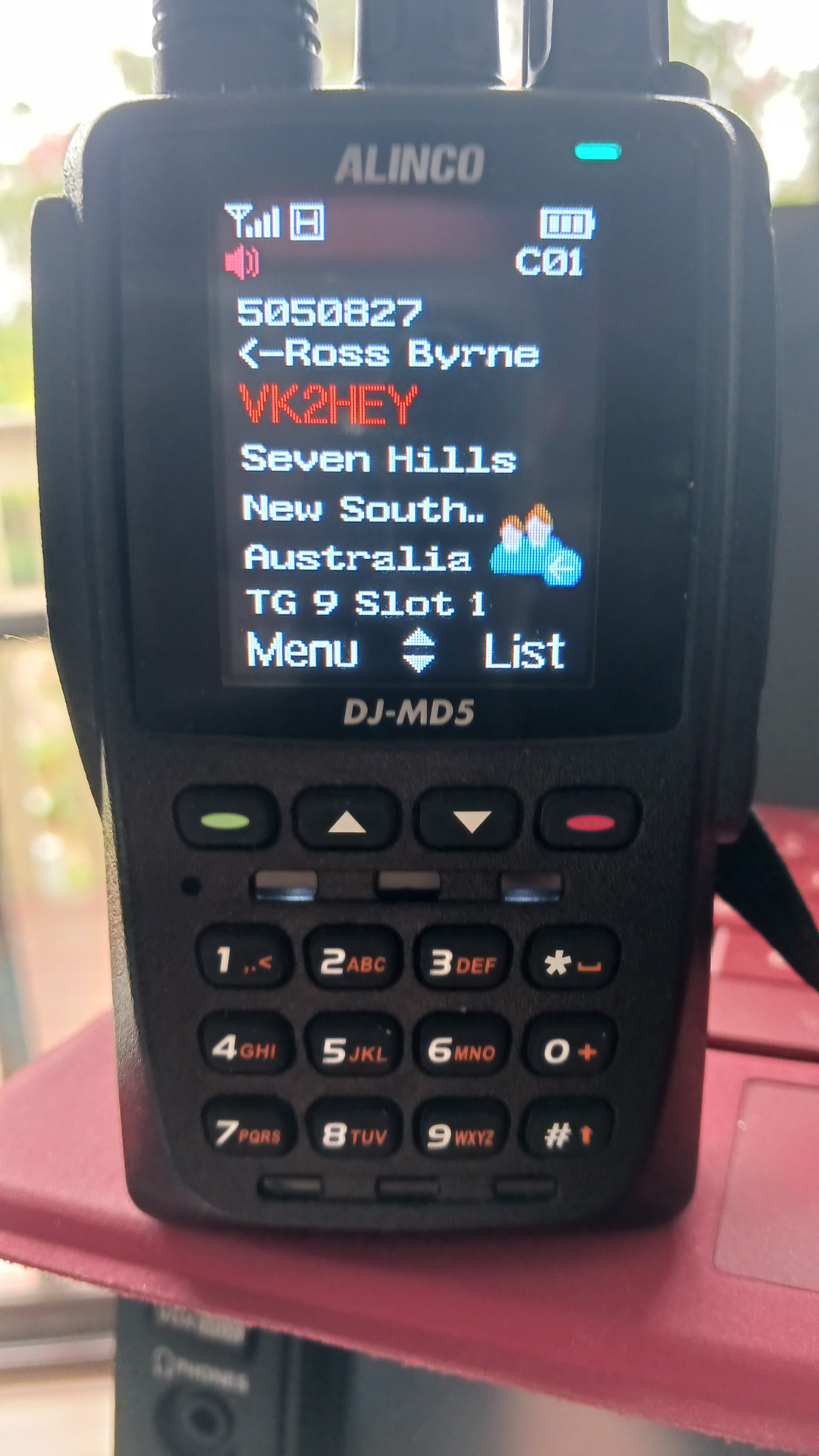
Pictured here is an Alinco DJ-MD5 showing how a RadioID can refer to a contact list loaded into the radio to display a contact’s details.
Below are two videos. The first is from BridgeCom and deals with the simpler process of bringing the entire database across. The second video is by me (version 2) and delves into creating smaller regional contact lists because some radios don’t have the capacity for the global list. My first attempt left out a crucial step in the process, now rectified.
Below is a VK2HEY interpretation to this whole RadioID thing… (comments welcome)
Edited and updated 02/08/2024.
It’s not illegal or forbidden by the ACMA to operate digital modes using anything other than your callsign announced by voice every ten minutes. There is nothing to say that you must squawk some number… but this is exactly what RadioID issues you.
When you first come across this idea of having to submit supporting evidence to some third party to access DMR, it’s not unreasonable to think, “Well, I passed my exam. I’ve got my license here hanging on the wall and I’m in the ACMA database as being granted my AOCP. Why do I have to now submit all my details to some entity I’ve never heard of before?” Why not just design a DMR based network that uses no numbers and no dashboard and therefore requires no substantiation of your license, relying on voice to determine if someone is genuine or not just like the good old days?
Without a unique number assigned to you, the network wouldn’t know where to route your QSO. Just like your telephone number or street address; for stuff to be delivered, the destination has to be known. This also protects your callsign.
When you look at commercial radio, it’s not the user being identified to the network but the radio itself because in a lot of organisations, handsets are in constant rotation through different hands working different shifts. Staff can be identified and tracked to a certain radio via their roster. But network monitoring or a “dashboard” is mostly being used to audit and control the radios, which in turn can locate users and keep them safe.
So in the commercial world, this number is to identify the radio. The number that RadioID hands out to hams, identifies you. Why?
Networks such as VKDMR are not interested in the actual radios or what might be termed “assets” in a commercial network because they belong to you and hams can have multiple radios anyway. “So if the radio is not important then why do I need a number?” Because the sophistication of trunked radio networks requires an address for all units. The offshoot is it keeps your callsign safe – preventing pirates cloaking themselves with a manufactured callsign or masquerading as someone else. Pirates will try to hide their identity or they may have malicious intent and want to deliberately anger you and annoy everyone else. We can all hear it’s not really you, but we can see they’re using your call sign.
Self regulation on the amateur radio digital networks has been evolving for about twenty years and the primary reason that EchoLink and now DMR networks need to vet everyone is because legitimate license holders would bombard the administrators of these networks over pirates using their callsign. Even if the true licensee doesn’t use digital networks, it’s not very pleasant for anyone to learn that your callsign is being used and abused and likely bringing unwanted notoriety to you personally.
“But I can use anyone’s number. Who’s going to be bothered searching for it?” They don’t need to because it’s all right there in front of them. Say hello to Digital Contacts.
 wacrs.org